Mari Swa:
Hello. Thank you for being here with me once more. I hope you are very well today. I am Mari.
Welcome to my channel. This information can be seen as science fiction or as the viewer sees best, and I post it for entertainment purposes only. Still, I take my information very seriously, and for whoever has eyes to see. I am writing this on the morning of April the 21st and 23rd, 2025.
I hardly ever write about planets, so I thought it might be a good idea to share with you how they are described as best as possible. I have mentioned planet Temmer countless times before while talking about other things, so I feel it gets a lot of attention anyway, more so as it is the most important planet for the Taygetan civilization, at least from a sociocultural, industrial, and population point of view. So I decided to talk about planet Erra, the next one moving away from the star Taygeta. It is the second planet of four large ones, plus a lot of planetoids, asteroids, and space rocks that accompany any solar system. Erra is also the most notorious planet of Taygeta because of the Billy Meier story, at least before my predecessors started to share our information, when Temmer started to get more attention simply because it is the so-called capital planet of the Taygetan civilization.
Planet Erra is slightly smaller than Earth, which gives it a gravity strength index of 0.8 as compared to Earth. But unlike planet Temmer, Erra is not considered a super-inhabitable planet because of its super harsh winters, which can be quite violent. Erra’s orbit is quite elliptical, which gives it extreme weather, which is also made worse by its strong axis inclination. This causes that when the planet is at its furthest point from the sun Taygeta, the effect of its axis inclination adds to the one of the increased distance to the sun. This causes an added cooling effect that affects each hemisphere depending on the time of its year and on its axial inclination.
When Erra is at its furthest point in its orbit around Taygeta, it enters a strong planet-wide winter, which means that the entire planet cools down. And this is when the axial inclination makes that planetary cooling even worse for the hemisphere that is getting its solar radiation at an inclined angle, as it has a double cooling effect. According to my data, Erra in one of its double winters may reach very low temperatures close to -80°C close to its poles, although typically it reaches between 45 and 55°C below zero. For comparison reasons, when a hemisphere on Earth enters winter, it is because of the solar rays reaching the planet at an angle because of its axial inclination and not because of any added distance which may be caused by Earth’s slightly elliptical orbit.
In the case of Erra, its orbit is so elliptical that it does cause a strong effect on the temperature and on the planet’s seasons. Also as a comparison point, planet Temmer has a very stable weather and seasons which are almost non-existent, and this is caused by its almost perfectly circular orbit around Taygeta, added to a nearly non-existent axial inclination. This causes Temmer to have very stable seasons, if it has any at all, and also a very stable weather, although some violent hurricanes, such as the one we experienced last year, may occur from time to time. This gives Temmer the quality of being a super-inhabitable planet, which means that it is friendlier to human life than planet Earth.
Unlike Erra, which is only friendly for half of its orbital year, planet Erra is a forest planet, as coniferous trees cover nearly all its land masses to the point where that species of trees vastly dominate over other species. There are hundreds of subspecies of coniferous trees in Erra, far more than the ones found on Earth, and the most dominant ones tend to grow almost three times as tall as the ones on Earth, most probably because of the planet’s low gravity, which is only 80% of the one of Earth, and because of the increased concentration of oxygen in Erra’s atmosphere.
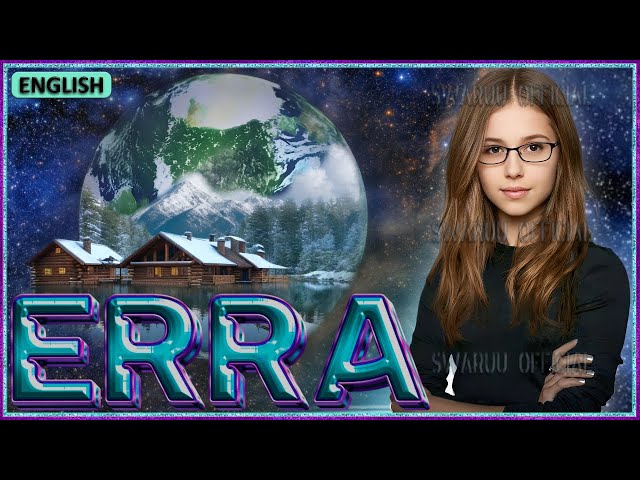
70% of the surface of the planet is land mass and only 30% is oceans. Yet its water cycle systems compensate for the lack of oceans with a very large number of landlocked sweet water lakes which dot the entire planet, all connected by a very large number of rivers and creeks connecting them. Erra is a coniferous forest planet with very high, eternal snow-covered mountains which gives it its uniqueness. A typical Erra scene is a log cabin at the side of a lake surrounded by tall pine trees and snow-covered mountains in the background which reflect onto the lake.
Most of the population of planet Erra, which is about 3.7 million, roughly 10% of the total Taygetan population, lives in its three main cities, which are Erra City, the planet capital and the largest one. Erra City, also called Yedera, is built near the planet’s equator, which is its warmest point year-round. Erra City is a seaport built at the shore of the planet’s largest ocean and is characterized by having high, glass-like skyscrapers in a very Alcyonean style.
The next one is Yedlit City, which is also built near its equator but on the opposite side of the planet and is also a seaport, but inside a large river some kilometers inland. Yet sea ships also come in and out of it. But unfortunately, the water masses near Erra City and Yedlit City do not connect, making sea transportation between both cities impossible.
And the smallest of the three main cities in Erra is Yedwasad, which is situated on a large volcanic mountain in the middle of Erra’s largest landmass, halfway between the equator and the planet’s polar regions. It is considered to be the most difficult city to live in of the three because it is the coldest. Yedwasad is partially built into the side of a volcanic mountain, making it easy to spot from afar as its countless city windows light up its side many levels high and following the mountain’s natural contours. The large city windows are embedded into the rock with natural formations in between, and the interior also exploits the natural cavernous systems found inside. This makes it a unique city, as there is no other like it, and it was designed like so to be able to face Erra’s harsh winters as best as possible. All four main cities in Erra have their own spaceports, although the largest one by far is on Erra City. But even being the largest on the planet, it is only about 10% the size of the spaceport in Toleka City, Temmer, and cannot handle ships as large.
Besides the three largest cities on Erra, there are countless small settlements or small towns scattered all over the planet, but Erran citizens also have a strong tendency to live alone, with their houses sometimes dozens of kilometers away from their nearest neighbors. They like to live isolated inside high-technology houses which are largely built with wood, at least on the exterior, and this is a testimony to Antaran influence over Taygeta. Logically, there are all kinds and styles of houses in Erra, and many are simply high-technology structures built with interstellar-age materials, which are the most efficient to withstand the harsh Erran winters. There are few roads connecting those isolated houses and small towns all over the planet, but they are scarce because the population of Erra prefers to do everything by air, being that Erra has the highest ratio of private starships per citizen with an average of five. Even with this high concentration of airborne crafts, the population still uses wheeled vehicles, especially during the hot seasons of the planet.
The amount of wildlife in Erra is staggering. But unlike on Earth among other planets, the relationship between the species is based on symbiosis and cooperation and not so much on exploitation. This makes Erra a very friendly planet as there are few predators, although large cats and wolves do exist in the wild, so if you are something like a fluffy bunny, you are still in trouble if you live there. As the prevalent natural system is symbiosis, plants do not hesitate to make themselves seen to the countless insects who serve them and to other plants. During the hot nights of Erra’s spring and summer, the entire forest lights up with an amazing and sheer, flabbergasting light show as the countless insects, plants, and even some of the trees light up the night with photoluminescence. Those forest nights are boiling with wildlife activity, and the sounds and noises there are simply wonderful, even more so as the predators are few and far apart. But I insist, they do exist.
Many species of plants and animals are the same as the ones found on Earth, as species are multi-planetary. Some of the most dominant ones are common to many planets and their solar systems, as they did not evolve there or anywhere else. Rather, they were seeded wherever they could flourish. Who seeded them, you may ask? And although it is known that countless interstellar star races keep on seeding planets, importing and exporting plant and animal species up to this day, it is not known who seeded most of the species found on planets, as that information is lost in the vastness of time and how it is perceived in space in a nonlinear way.
The process of seeding a planet with any species, plant or animal, is very controversial and even dangerous, as one wrong species can destroy an entire ecosystem. An example of this is the M’Oa birds found on planet Temmer, which are tropical animals and highly gregarious. They do tend to be invasive and destroy crops and fruit plantations and can be a nuisance even though they do not fly. It would be very dangerous to introduce M’Oas into Erra from Temmer, as they would invade and destroy its delicate symbiotic ecosystems. So it is highly prohibited to transport even one single of those birds from Temmer to Erra. Although planet Erra also knows how to defend itself from this kind of unwanted animals, as M’Oas, being tropical birds, would not survive an Erra winter, and that would be the end of their invasion.
In the end, each species is highly adapted to its planet and its seasons. Even so, many insects, plants, and small animals are short-lived as they are born in spring and die in winter as the temperatures drop. Most evolved animals, such as mammals, tend to burrow underground and in the countless caves which are found all over Erra’s volcanic mountains, where they hibernate until spring.
Winters in Erra are famous for their harshness, but they also have something even worse, as they tend not to be as markedly progressive as on Earth, where temperatures start to drop slowly as the year gets older and fall arrives. On certain parts of Erra above the equator, full winter may arrive within a couple of hours, where people, animals, and plants may be enjoying a beautiful, warm, sunny day, and suddenly a wall of whiteness may start to advance towards them. You can see a super-dense low cloud coming down from the mountains towards you at a fast pace. And when it arrives, temperatures may suddenly drop as much as 50°C in a matter of a few minutes. Winter arrives very violently with a storm of snow and ice, and with it, death arrives for countless animals, insects, and plants. Winter arrives progressively in a matter of some three or four days in the equatorial zones of Erra, but up north or south, it arrives in minutes. The population of Erra knows the dangers they are exposed to while living in certain areas of the planet, and many people have died when they were caught off guard, even inside advanced vehicles, because this kind of winter supercell can cause small starships to crash or to become stranded if inside a garage or if left exposed. Only the best private small starships can escape by entering hyperspace while still on the surface of the planet, but not all Taygetan aerial vehicles can. This explains why Errans depend on their starships so much, as they are their very lifelines.
Anyhow, Erra is a beautiful, soft planet full of life but with a bad temper, because storms are also common all over the planet, even during the warm periods of its year. It rains a lot in Erra when not in winter. Sometimes it looks like it’s raining all the time, as it can rain continuously for several days non-stop, but there are many warm, beautiful, sunny days as well. Erra is full of beauty with breathtaking landscapes and a very large and complex range of ecosystems. Even with its super harsh winters, Erra is always boiling with life of all kinds, and many of its species are completely unknown to Earth. For example, there are some plants which are shaped like a ball and like to dwell in highly humid places, mostly near swamps. They live in large concentrations of them and are about a meter tall or in diameter. These plants, if they feel threatened, uproot themselves and literally run away, crashing and slamming clumsily onto each other and onto other plants, trees, and objects as they do so in a very hilarious manner. They can be very fast, yet they don’t run away very far, but I guess enough to frighten away any threat. All this as a survival mechanism. They are plants and they do not have eyes, yet they do have some kind of extrasensory perception that guides them somehow, at least limitedly.
Erra’s summer nights are extremely beautiful, not only because of the photoluminescent feast of insects and plants all over the place, but when it is cloudless, also because of the soft blue light coming from the Pleiadian blue nebula that envelops much of M45’s solar systems. And when it is seen, also because of the soft pale blue light coming from Taygeta’s binary dwarf star, Sardica or TA 19b, which acts like the moon does for Earth. All this adds to cause a unique effect on wildlife which makes the entire forest light up in a light and noise show, as if the plants, insects, birds, and animals were in a huge party.
Erra is a beautiful but temperamental planet which causes most inhabitants to flee to planet Temmer during Erra’s winter, as Temmer is always warm and most definitely is a super-inhabitable planet. This will be all for today. As always, thank you for watching my video and for liking, sharing, and subscribing for more. It helps this channel grow a lot, and I hope to see you here next time.
With much love and appreciation, your friend,
Mari

